
The Real Compliance Risk Usually Isn't the Audit. It's the Vendor Nobody's Asked About
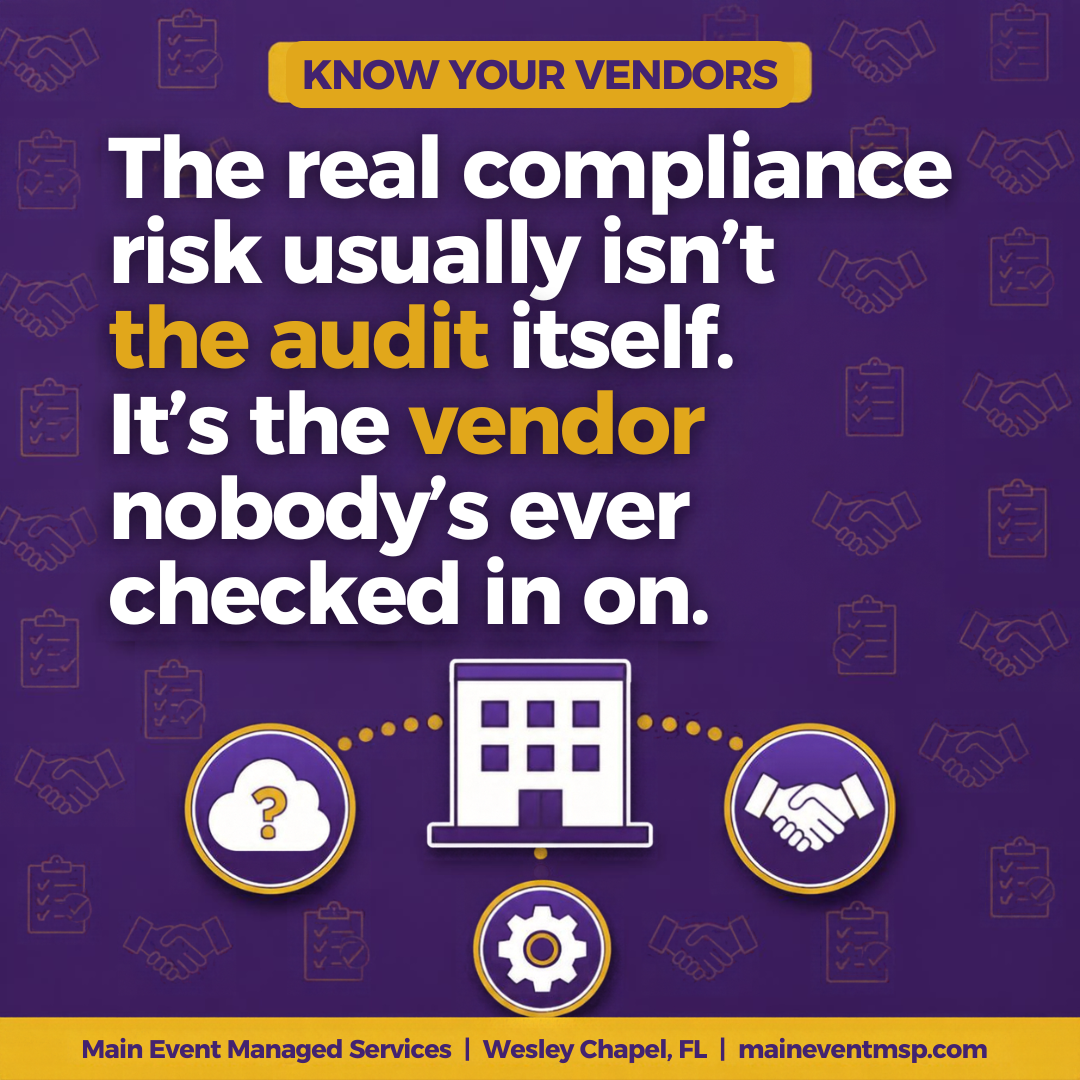
Ask most insurance agency owners what keeps them up at night about compliance, and the answer is usually some version of the audit. Getting the paperwork right, having the policy on file, being ready if someone asks to see it. All reasonable things to worry about. But the audit itself is rarely where the real risk sits. The quieter, easier to miss risk is the list of vendors touching your customer data that nobody's ever really looked at closely.
Every vendor is a small extension of your own security
Modern agencies run on a stack of outside tools. Software that stores client files and policy details. A marketing platform holding your contact list. An IT provider with broad access to your systems. A document signing service. A payment processor. Each one of these has its own security practices, its own employees, its own potential for a breach, and when something goes wrong on their end, it can become your problem just as easily as if it happened on your own systems.
This is the part that's easy to lose sight of. Your own internal safeguards can be excellent, and you can still have a real exposure sitting in a vendor relationship nobody's ever asked a single question about.
Why this gap forms so easily
Vendors tend to get added one at a time, often quickly, often by whoever needed a tool to solve an immediate problem. Nobody sits down and decides, all at once, "here's our complete vendor risk policy." It accumulates, tool by tool, over years, and at no point does anyone naturally circle back and ask the basic questions that should have come up when each one was first added.
By the time an agency has been operating for a few years, it's common to find a dozen or more vendors with some level of access to customer information, and no single document that lists them all, let alone what's known about how each one protects that data.
A simple way to close the gap
• Make an actual list. Every vendor that touches customer information in any way, even the ones that feel minor or have been around so long nobody thinks about them anymore.
• Ask a few basic questions of each one. How is data protected at rest and in transit? Who at their company can access it? What's their process if something goes wrong on their end? Do they have a breach notification commitment in writing?
• Keep the answers somewhere real. A shared document or simple spreadsheet works fine. The goal isn't a fancy system, it's having real answers somewhere you can actually find again, rather than a vague memory of a conversation from two years ago.
• Revisit it on a schedule. Once a year is reasonable for most small agencies, plus any time a new vendor gets added.
A short list with honest, current answers is worth far more than an exhaustive list built once and never opened again.
What to do when a vendor's answer isn't great
Sometimes this exercise turns up a vendor whose answers aren't especially reassuring. That's useful information, not a crisis. It might mean asking for more detail, looking at whether the data they hold could be minimized, or in some cases deciding the relationship isn't worth the exposure. The point of the exercise isn't to catch every vendor doing everything perfectly, it's simply to know where you stand instead of assuming everything's fine by default.
A ten minute version to start with
If a full vendor review feels like a bigger project than you have time for right now, start smaller. List your five most important vendors, the ones with the deepest access to customer data, and send each one a short email asking how they protect that information. Five emails, ten minutes of your time, and you'll already know more than you did this morning. The rest of the list can follow when you have a bit more time.
This reflects how regulators actually think about it
Vendor oversight shows up consistently in cybersecurity frameworks that insurance regulators draw from, including guidance built around the NAIC model law that has shaped requirements in many states. The underlying idea is straightforward: a licensee's responsibility for protecting customer information doesn't stop at the edge of its own network, it extends to whoever else has a hand in that data.
What this means under Rule 69O-128.032
Florida Administrative Code Rule 69O-128.032 calls for a comprehensive written information security program with administrative, technical, and physical safeguards for customer information, scaled to the size and complexity of the licensee. A documented vendor list, reviewed on a real schedule, with real answers on file, is a concrete and genuinely useful piece of that program, the kind of thing that's easy to describe and show, rather than something vague you'd have to reconstruct from memory if anyone ever asked.
Main Event Managed Services helps Florida insurance agencies in Wesley Chapel and across Tampa Bay build vendor lists that actually hold up and fold them into a written information security program that reflects how the agency really operates. Visit maineventmsp.com to get started.