

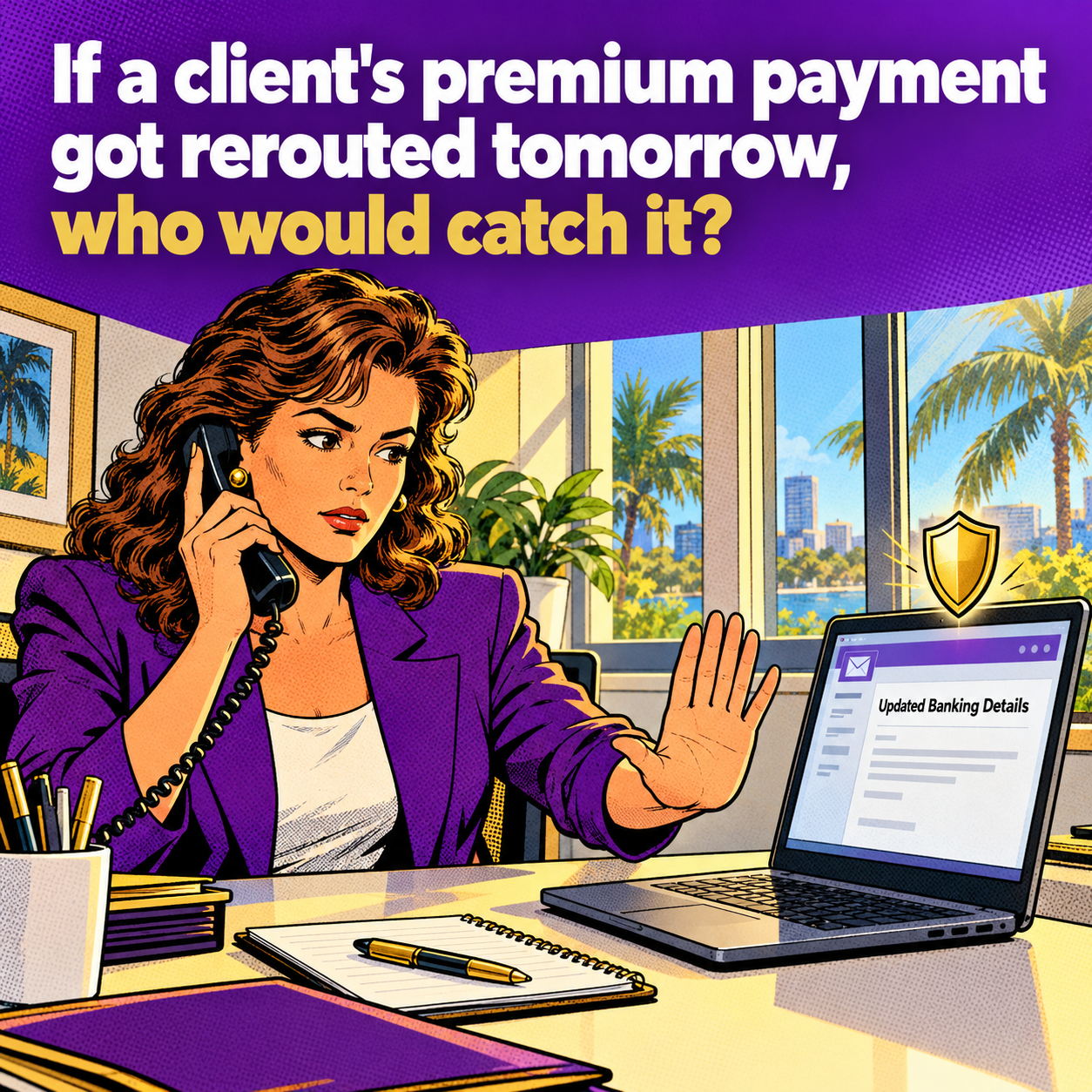
Picture a normal Tuesday at your agency. A long-time commercial client emails to say their bank has changed and asks you to update the account for an upcoming refund. The email comes from their real address. It references the right policy. The signature block looks exactly like every other message they have sent you. Your CSR updates the information, the funds go out, and everyone moves on.
Two weeks later, the client calls asking where their money is.
This scenario has a name: business email compromise, often shortened to BEC. It is one of the most financially damaging forms of cybercrime facing small businesses, and insurance agencies are especially attractive targets because money moves through them constantly.
How Payment Rerouting Scams Actually Work
These attacks rarely involve sophisticated hacking. They usually follow a patient, predictable pattern.
First, the attacker gains access to an email account. That might be your client's account, a vendor's account, a premium finance company's account, or one of your own employees' accounts. A stolen password from a phishing email is usually all it takes.
Next, they watch. Attackers often sit inside a compromised mailbox for days or weeks, reading conversations to learn who pays whom, when payments are due, and how people normally write. Some create hidden mailbox rules that quietly move certain messages out of sight so the real account owner never sees the replies.
Finally, they strike at the right moment. A message arrives with new banking instructions, timed to land right before a real payment is due. Because it often comes from a legitimate account, or from a lookalike domain that differs by a single character, it sails past both spam filters and human suspicion.
Where Agencies Are Most Exposed
Insurance agencies handle several kinds of transactions that make good targets:
• Client refunds and return premiums
• Payments to carriers and premium finance companies
• Commission and vendor payments
• Changes to client banking details for recurring drafts
Any process where someone at your agency changes where money goes, based on an email, is a process an attacker can exploit.
The Warning Signs Your Team Should Know
Train everyone who touches money to pause when they see any of these:
• A request to change banking or payment details, especially close to a due date
• Unusual urgency or pressure to act before the end of the day
• A request to keep the change quiet or to skip the normal process
• Slight differences in the sender's address or domain
• A phone number in the email that does not match the one on file
• A tone or writing style that feels a little off from the person's usual messages
None of these alone proves fraud. Together, they are a reason to stop and verify.
Controls That Stop Most Attempts
The good news is that the most effective defenses are procedural, not expensive.
Call-back verification
Any change to payment instructions should be confirmed by phone using a number you already have on file, never a number provided in the email requesting the change. This single habit stops the majority of these scams.
Dual approval
Require two people to approve any change to where money is sent. An attacker may fool one busy person, but fooling two people following a written process is much harder.
Protect your own mailboxes
Multi-factor authentication on every email account is essential. Your IT provider should also monitor for suspicious sign-ins, newly created forwarding rules, and logins from unexpected locations. External email banners that flag messages from outside your organization add another useful layer.
Write it down
Document your payment change procedure and make sure every employee knows it. A written process gives your team permission to slow down, even when a frustrated client is pushing.
What to Do If It Happens
Speed matters. If you suspect a fraudulent transfer, contact your bank immediately and ask about recalling the funds. Report the incident to the FBI's Internet Crime Complaint Center at ic3.gov. Notify your cyber insurance carrier as early as possible, because many policies have specific reporting requirements. Preserve the emails and logs rather than deleting them.
If one of your own mailboxes was compromised, the attacker may have had access to client personal information. That can trigger obligations under the Florida Information Protection Act, so involve your attorney and IT provider quickly to understand what was exposed.
The Compliance Connection
Florida Rule 69O-128.032 expects agencies to protect customer information with safeguards appropriate to their size and complexity. Strong email security, documented verification procedures, and staff training are exactly the kind of safeguards that demonstrate a program that actually works.
Main Event Managed Services helps independent agencies across Wesley Chapel and Tampa Bay lock down email, monitor for compromised accounts, and build practical procedures their teams will follow. If you are not confident your agency would catch a fake payment request, visit maineventmsp.com and let's talk about closing that gap before someone tests it.