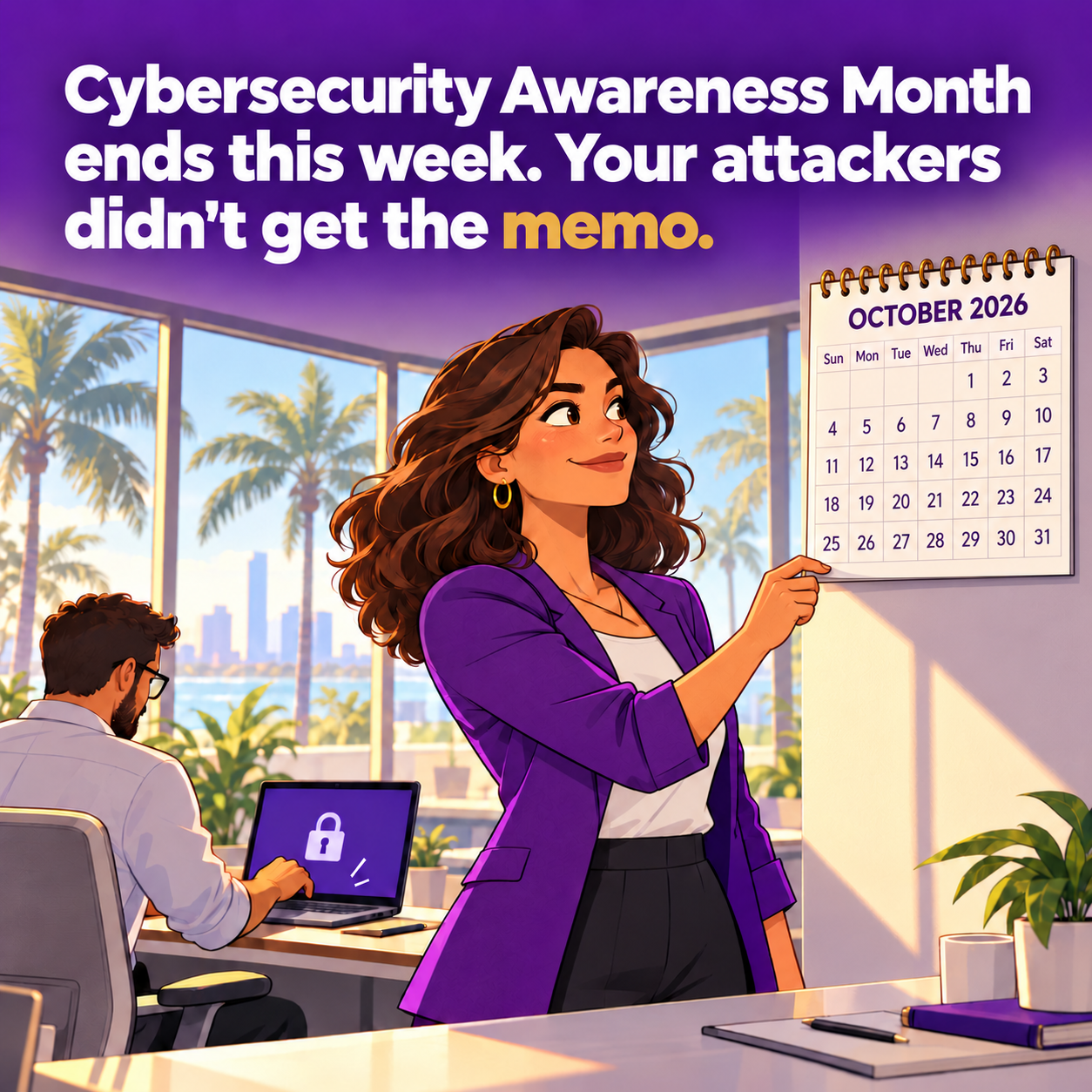
Every October, the cybersecurity world gets a little louder. Vendors publish checklists, industry groups share tips, and LinkedIn fills up with reminders to update your passwords and watch out for phishing. That attention is genuinely useful. For a lot of small business owners in Wesley Chapel and across Tampa Bay, October is the one time of year security gets a real seat at the table.
But here is the uncomfortable truth: criminals do not follow the awareness calendar. The phishing campaign that lands in your inbox on November 3 will look exactly like the one that arrived on October 3. The only difference is whether your team is still paying attention.
Why Awareness Alone Does Not Stop Attacks
Awareness is about knowing. Security is about doing. You can know that multi-factor authentication matters and still have three accounts without it. You can know that former employees should lose access the day they leave and still find an old login active six months later.
Most small business breaches do not start with exotic hacking techniques. They start with ordinary gaps: a reused password, a missed update, a convincing email that arrived at a busy moment. Those gaps close through habits and systems, not through a single month of attention.
Five Habits to Carry Into November and Beyond
1. Turn one tip into one change
Look back at the security advice you saw this month and pick the single item that applies most to your business. Then actually do it before the week ends. One completed change beats ten bookmarked articles. If you are not sure where to start, start with your email accounts, because that is where most attacks begin.
2. Make MFA non-negotiable
If any account in your business still relies only on a password, that is your first priority. Email, banking, accounting software, your agency management system, cloud file storage, and your website login all count. Attackers specifically look for the account that got skipped, and they are very good at finding it.
3. Review access on a schedule
Set a recurring calendar reminder, quarterly at minimum, to review who has access to your systems. Remove former employees, old vendors, and shared accounts nobody remembers creating. Access tends to pile up quietly over the years, and every unused account is a door someone else might open.
4. Keep the conversation going with your team
Your employees are your first line of defense, and they need more than one reminder a year. A short monthly huddle, even fifteen minutes, keeps security top of mind. Share a recent scam example, talk through what to do if something feels off, and make it clear that reporting a mistake quickly is always better than hiding it. A team that feels safe speaking up catches problems early.
5. Know who you call when something goes wrong
If an employee clicks a bad link at 4:45 on a Friday afternoon, what happens next? Who do they tell? Who shuts down access? Who calls your cyber insurance carrier? A simple written plan turns a panic moment into a checklist, and a checklist is much easier to follow when your heart is racing.
For Florida Insurance Agencies, This Is Not Optional
If you run an insurance agency in Florida, security is more than good practice. Florida Administrative Code Rule 69O-128.032 expects licensees to maintain a written information security program with administrative, technical, and physical safeguards that fit the size and complexity of the business. That program is meant to be active and maintained, not a document created once and filed away.
From my years working inside a specialty insurance carrier, I can tell you that the agencies that handle security well treat it as an ongoing operational process. They review, they test, they train, and they document what they did. That documentation matters if a regulator, a carrier, or a client ever asks how you protect their information. Cybersecurity Awareness Month is a great prompt, but your compliance obligations run all twelve months.
Make Security a Year-Round Rhythm
The goal is not perfection. The goal is consistency. Here is a simple rhythm that works for most small businesses:
• Monthly: a short team security huddle and a quick check that software updates are applying
• Quarterly: an access review and a backup restore test
• Annually: a full risk review, a policy update, and an incident response tabletop exercise
That rhythm is realistic for a three-person office or a fifteen-person agency, and it covers most of the gaps attackers rely on. Put the dates on your calendar now, while the motivation from October is still fresh.
Local Businesses Deserve Local Support
Small businesses in Wesley Chapel, Lutz, Land O' Lakes, and throughout the Tampa Bay area are the backbone of this community. They are also exactly the businesses attackers target, because criminals assume nobody is watching closely. Main Event Managed Services exists to change that assumption.
If October got you thinking about security, let's keep the momentum going. Reach out through maineventmsp.com and we can talk through where your business stands today and what a sustainable security rhythm could look like for your team.
Cybersecurity Awareness Month ends this week. Your security program should not.