Scammers Know Your Newest Hire Exists Before Your Newest Hire Knows Anyone's Name
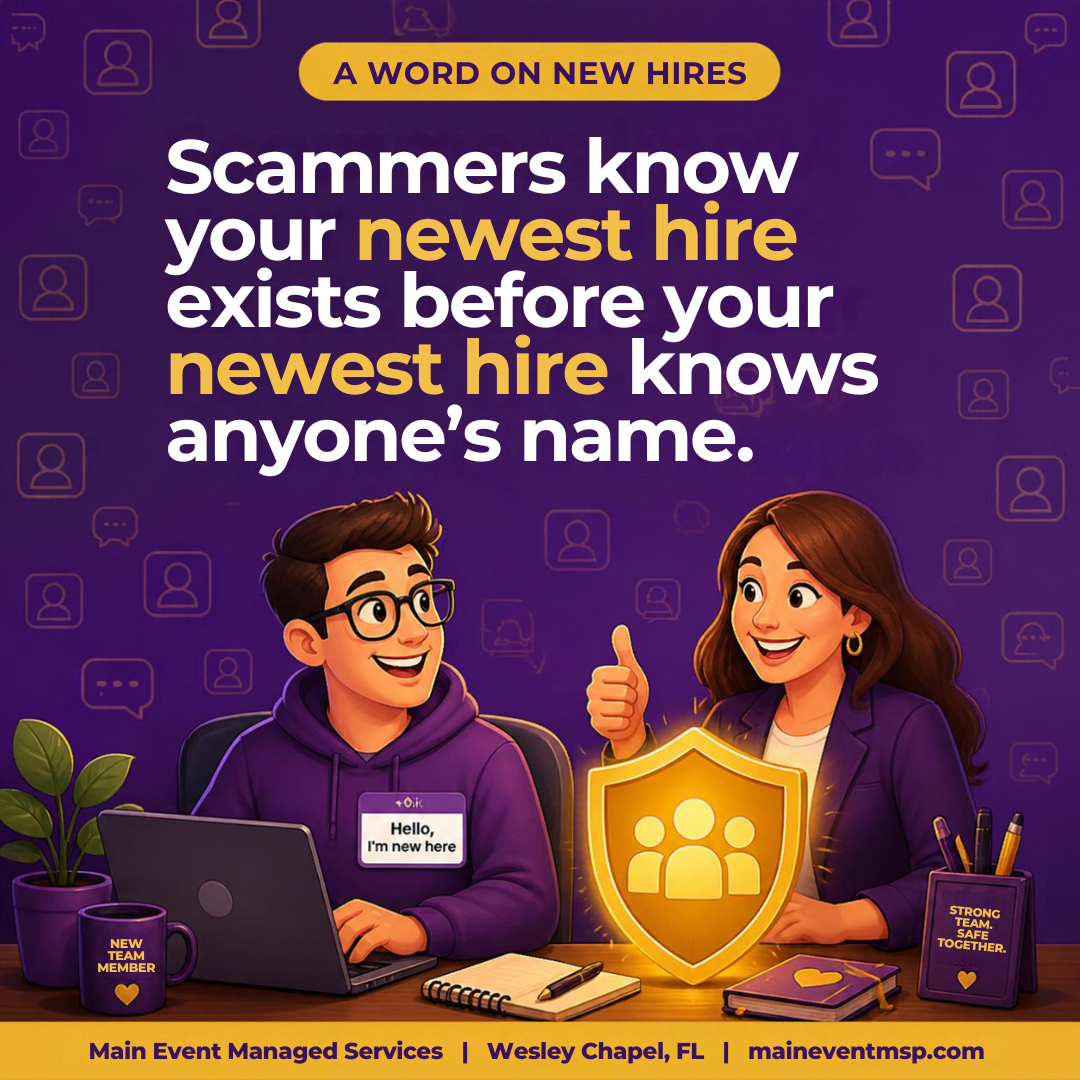
Here's a detail that catches most business owners off guard the first time they hear it: scammers actually monitor LinkedIn for posts that say "started a new position at." It sounds oddly specific, but it makes complete sense once you think about who that announcement is really advertising to. It's not just telling old classmates and former coworkers about a new job. It's telling anyone paying attention that a particular person, at a particular company, just became the easiest target in the building.
Why a brand new employee is genuinely easier to fool
This has nothing to do with a new hire being careless or poorly trained. It comes down to two things that are true of literally everyone in their first week at a job, no matter how sharp they are. First, they don't yet know what's normal. They haven't heard their coworkers' voices on a call, don't know who typically emails who about what, and have no instinct yet for what a routine request from "the CEO" actually sounds like at this specific company. Second, they're highly motivated to be helpful and responsive, because making a strong first impression is exactly what's on their mind during those first few days.
Put those two things together and you have exactly the conditions a social engineering attempt is built to exploit. A message that would immediately look strange to a five year employee, an unusual request, an odd tone, a detail that doesn't match how the real person writes, simply doesn't register the same way to someone who has no baseline for comparison yet.
What this actually looks like
The classic version of this scam is a message that appears to come from a senior leader, often timed for a new hire's first few days, asking for something urgent and slightly unusual: purchasing gift cards for a client event, handling a quick wire transfer, or resetting a password for "a meeting in five minutes." The message usually plays up urgency and flatters the new hire a little, framing the request as a chance to be helpful right out of the gate. It's a well worn playbook precisely because it works often enough to keep being used.
What actually helps, without making anyone paranoid
• Say it out loud, early. Tell new hires directly, ideally in their first day or two, that double checking an unusual request is always fine, no matter who it appears to be from or how urgent it seems. Permission to ask removes the social pressure that makes these scams work in the first place.
• Pair them with a buddy. Someone they can quietly message with "hey, does this seem normal to you?" without worrying it makes them look unsure of themselves. A five second question to a buddy beats a costly mistake every time.
• Ease into sensitive access. There's rarely a good reason a brand new employee needs same-day access to payment systems or the ability to approve wire transfers. A short, deliberate ramp-up period closes a real window of exposure without slowing anyone's actual onboarding down.
• Share a real example, if you have one. A quick, specific story about a request that turned out to be fake sticks with people far more than a generic warning ever does.
This is about the opening, not the person
It's worth being clear about what this isn't. It isn't a suggestion that new hires are careless or need to be watched more closely than everyone else. It's a recognition that unfamiliarity itself, being new, not yet knowing the people or the patterns, is the actual opening being targeted. Anyone would be more vulnerable to this in their first week at any job. The fix isn't scrutiny, it's simply giving people the context and permission to pause before acting on something that feels even slightly off.
A five minute addition to onboarding
This doesn't need a formal training program. A genuine five minute conversation during someone's first day, framed as a normal part of welcoming them aboard rather than a warning, covers almost all of it. Mention the LinkedIn detail specifically, it tends to land well because it's surprising and concrete, and people remember specific, surprising facts far better than general advice.
What this means for Florida insurance agencies
Insurance agencies often bring new hires into roles that touch client files and financial processes fairly quickly, which makes this exact scenario worth planning for. Florida Administrative Code Rule 69O-128.032 calls for a written information security program with administrative, technical, and physical safeguards for customer information, scaled to the size of the agency. A documented practice of gradual access and an explicit "always okay to double check" message for new hires is a concrete, easy to describe piece of that program.
Main Event Managed Services helps Wesley Chapel and Tampa Bay businesses, including Florida insurance agencies, build these habits into onboarding from day one. Visit maineventmsp.com to talk through your team's setup.