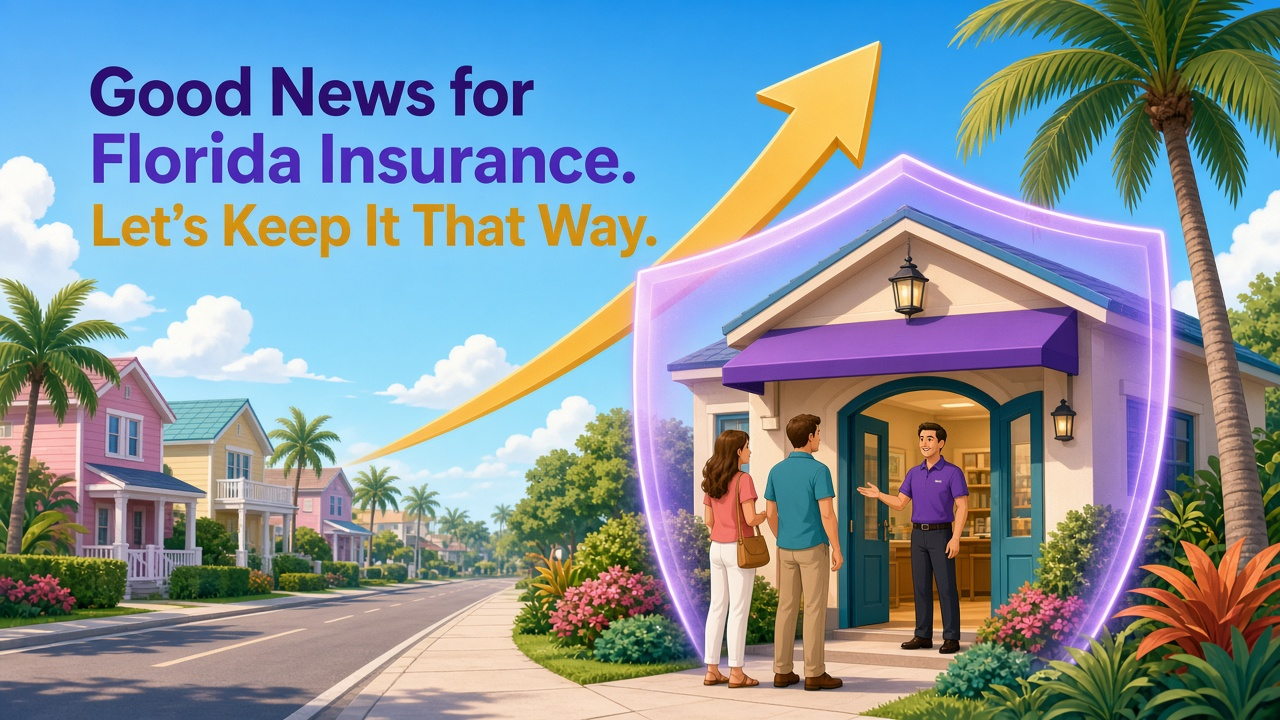
For Florida's independent insurance agents, the last few years felt like one long storm. Carriers pulled out, insolvencies piled up, renewals came with painful increases, and agents spent more time delivering bad news than writing new business. That's finally starting to change.
The headlines tell a different story now. Florida's Insurance Commissioner has pointed to the state posting the lowest rate increases in the nation. Citizens Property Insurance Corporation proposed its first statewide rate decrease in more than a decade. The state's five largest auto insurance groups, representing roughly 78 percent of the market, indicated an average rate change of about negative 8 percent for 2026. And an R Street Institute analysis published this week noted that Florida's share of the nation's homeowners insurance lawsuits has fallen from 79 percent in 2022 to roughly 40 percent following legislative reforms.
For agencies in Wesley Chapel, Tampa, and across the Tampa Bay area, that means more carrier options, more competitive quotes, and a real opportunity to grow. It also makes this the right time to make sure a cyber incident doesn't take the momentum away.
Why Growth Increases Cyber Risk
It's easy to think of cybersecurity as something to worry about when times are tough. In reality, periods of growth are when security most often slips.
More business means more client data. Every new policy brings names, dates of birth, driver's license numbers, property details, claims history, and often payment information into your agency. The bigger your book, the bigger the prize for an attacker.
New staff get access before they get training. When the phones are ringing, it's tempting to hand a new CSR a shared login and figure out security training later. That's exactly the window attackers look for.
New carrier appointments mean new portals and new passwords. Each one is another account that can be phished, reused, or forgotten when someone leaves the agency.
More money is moving. Premium payments, commissions, and return premiums all touch email at some point. Business email compromise, where an attacker impersonates a client, carrier, or vendor to redirect a payment, thrives in busy offices where nobody has time to double-check.
Attackers Know Where the Data Lives
Insurance organizations have been steady targets this year. In one case, a managing general agency disclosed that a single compromised employee account led to the exposure of sensitive policyholder data, including Social Security numbers and claims information, across its agent network, ultimately affecting more than a million people. Smaller agencies make headlines less often, but they hold the same kinds of data, usually with far fewer protections in place.
Five Safeguards to Lock In While Times Are Good
• Turn on multifactor authentication everywhere. Email, your agency management system, and every carrier portal that supports it. MFA remains one of the most effective ways to stop account takeovers, and cyber insurers expect it.
• Make onboarding and offboarding a checklist. New hires get their own accounts with access that matches their role. Departing employees lose access the same day, including carrier portals.
• Verify every payment change by phone. Any request to change where money goes, whether it appears to come from a client, a carrier, or a vendor, gets confirmed with a call to a number you already have on file. Never the number in the email.
• Back up the data you can't afford to lose. Make sure client records and agency files are backed up, protected from ransomware, and actually tested to confirm they can be restored.
• Put your safeguards in writing. A written information security program aligned with Florida Administrative Code Rule 69O-128.032 and NAIC cybersecurity standards shows regulators, carriers, and clients that you take protecting their information seriously.
Don't Forget Your Own Cyber Coverage
You spend your days helping clients understand their coverage. It's worth turning that same eye on your own agency. Cyber insurance applications have become more detailed, asking about MFA, endpoint protection, backups, patching, and employee training. Answering those questions accurately, and being able to prove your answers, protects both your eligibility and your ability to collect if something goes wrong.
It's also worth checking whether your agency's policy covers business email compromise and funds transfer fraud, which are among the most common losses for small offices, and whether it includes access to breach response services like legal counsel and forensics. Knowing what you have before you need it is the same advice you give your clients every day.
Keep the Good News Going
The recovery of Florida's insurance market is a hard-won opportunity. Agencies that pair growth with solid security will be in the best position to take advantage of it, and in the best position to reassure clients who are trusting them with more personal information than ever.
How Main Event Managed Services Helps
Main Event Managed Services works with independent insurance agencies across Wesley Chapel, Tampa, and the Tampa Bay area to build security programs that grow with the business. We help with MFA rollout, access management, email security, backups, compliance mapping to Rule 69O-128.032, and cyber insurance readiness, so you can focus on writing business while we focus on protecting it.
Let's talk about keeping your agency's momentum going. Reach out at contact@maineventmsp.com or visit maineventmsp.com.