That Call Sounded Exactly Like Your Client. Here's Why That's Not Enough Anymore
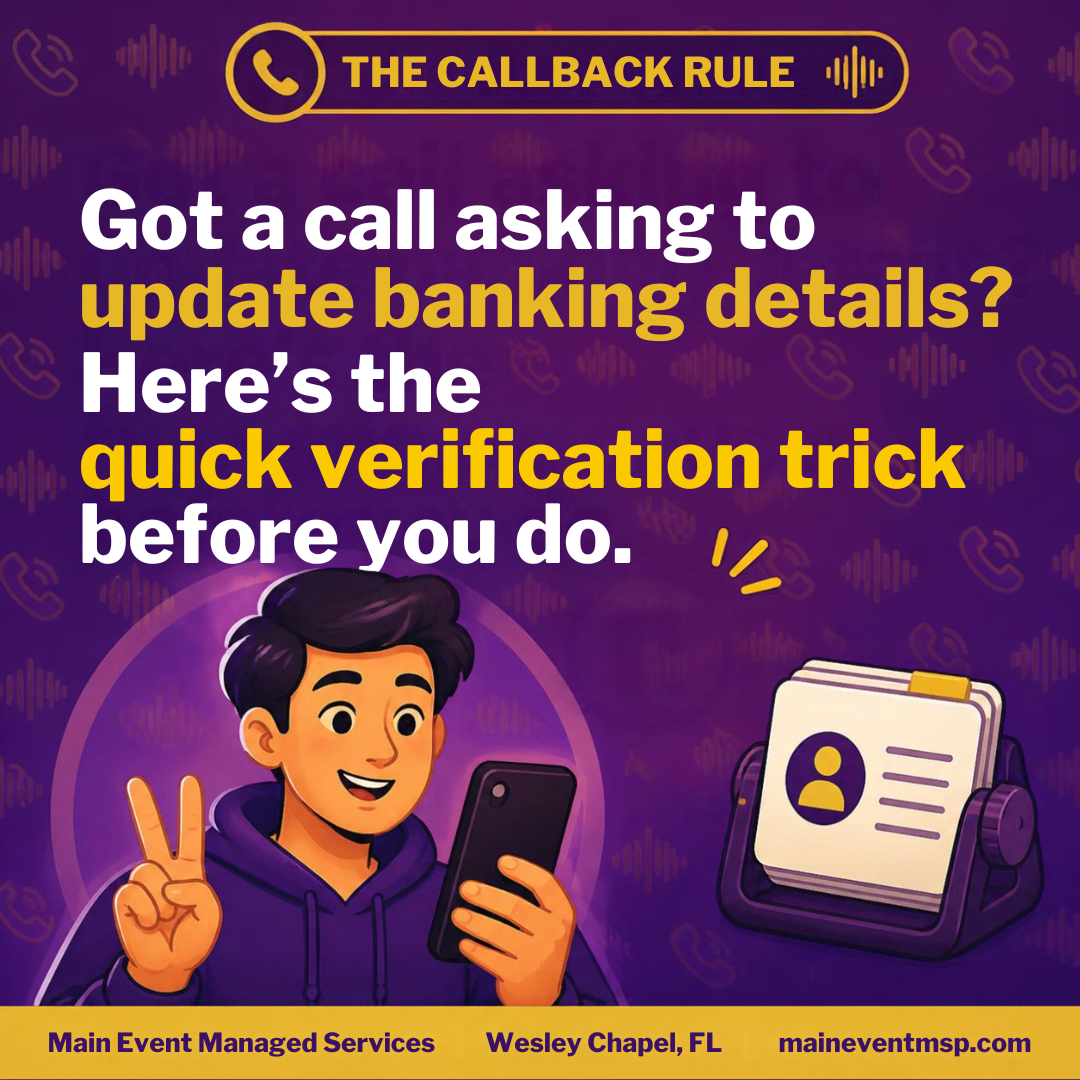
A call comes into your office. It's a longtime client, or it sounds exactly like one, asking you to update the bank account details for an upcoming payment. The voice is right. They mention a detail from a past conversation. Nothing about it feels off. A few years ago, that would have been the end of the story: the voice matched, so the request was real. These days, that assumption needs an update, and it's worth five minutes with your team in Wesley Chapel or anywhere across Tampa Bay to talk through why.
What changed
Voice cloning tools have improved dramatically, and they don't need much to work with. A short clip of someone talking, pulled from a voicemail, a video call recording, a webinar, or even a social media post, can sometimes be enough to generate a convincing imitation of their voice. The technology isn't perfect, and a long, unscripted conversation can still reveal something off. But a short, urgent phone call asking for one specific thing is exactly the scenario where a cloned voice is hardest to catch.
This isn't meant to make anyone paranoid about picking up the phone. It's meant to explain why one particular habit matters more than it used to.
The habit that solves it
You don't need new software or a big process change. You need one simple rule, applied consistently: before changing any banking or payment detail, over the phone or in an email, hang up and call back using a number you already have on file, not one the caller gives you.
This works because it breaks the one thing a scammer, cloned voice or not, can't control: which phone number you actually dial next. If the original call was fake, calling the real client's known number will make that obvious fast. If the call was genuine, the client will understand completely, because any business that handles money seriously should be doing this.
Make it a policy, not a judgment call
The tricky part of catching these scams isn't the technology, it's the social pressure. Nobody wants to seem like they're accusing a real client of lying, especially when the voice sounds exactly right and the request seems urgent. That's exactly why this needs to be a stated policy rather than something each employee decides in the moment.
Tell your team, clearly and in writing: every banking or payment detail change gets confirmed with a callback to a known number, every single time, no exceptions, regardless of who's asking or how urgent it sounds. When it's policy instead of personal judgment, nobody has to feel awkward about following it.
Other places this same habit helps
The callback rule isn't just for voice calls. The same logic applies to email requests for banking changes (confirm by phone, using a known number, not one in the email), text messages claiming to be from a vendor, and even video calls, since video can be manipulated too. The common thread across all of them is the same: confirm anything involving money through a second channel you already trust, never the one the request arrived on.
Talking about it without sounding alarmist
This is a great topic to bring up casually rather than as a scary warning. Frame it the way it actually is: a smart habit, like locking the office door, not a sign that the world has become dangerous. A five minute mention in a team meeting, paired with a real example if you have one, tends to stick a lot better than a formal memo nobody reads closely.
Why this still comes down to a phone call
It might seem old fashioned that the fix for a high-tech scam is something as simple as picking up the phone, but that's exactly why it works. A callback to a number you already trust sidesteps the entire problem, because the scam depends on you responding within the call or message it arrives in. The moment you step outside that channel, cloned voice or not, the attacker loses their only foothold. Simple beats clever here, which is good news, because simple is also easy to teach and easy to stick to.
For Florida insurance agencies
Insurance agencies regularly handle requests involving payment details, premium changes, and account updates, which makes this a particularly relevant habit. Florida Administrative Code Rule 69O-128.032 calls for a written information security program with administrative, technical, and physical safeguards for customer information, scaled to the size of the business. A documented callback policy for any change to payment or account information is a clear, easy-to-explain example of an administrative safeguard, and it costs nothing to put in place.
With Cybersecurity Awareness Month starting October 1, this is a timely one to walk through with your whole team. Main Event Managed Services works with Wesley Chapel and Tampa Bay businesses, including Florida insurance agencies, to build these kinds of habits into everyday operations. Visit maineventmsp.com to talk it through.