The Phone-Based Scam Your Security Training Probably Isn't Covering
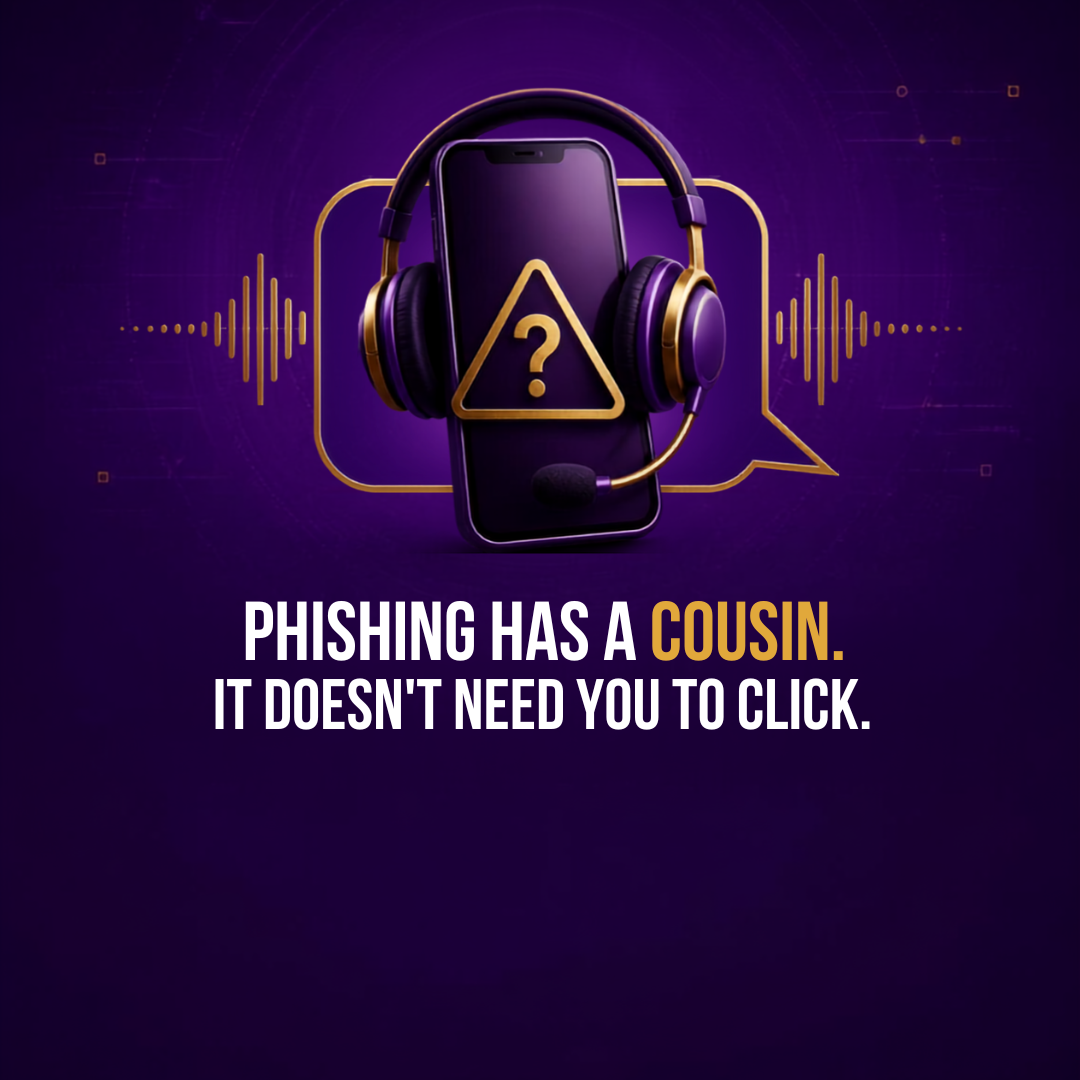
Most security awareness training focuses almost entirely on email. Employees learn to spot suspicious links, check sender addresses, and hesitate before clicking anything urgent. That training is important, but it leaves a gap. A growing category of social engineering attack does not use email at all. It uses the phone.
What Vishing Actually Looks Like
Vishing, short for voice phishing, is a scam where an attacker calls an employee directly and impersonates someone trustworthy: IT support, a software vendor, a bank representative, or even a coworker or executive using a spoofed caller ID. The goal is the same as email phishing, to get the target to hand over credentials, click a link sent during the call, or grant remote access to a system, but the method relies entirely on a convincing voice and manufactured urgency instead of a malicious attachment.
Because there is no link to hover over and no obviously fake email address to spot, vishing attacks bypass a lot of the instincts employees have been trained to rely on.
Why This Matters for Client-Facing Businesses
Businesses that handle a high volume of phone communication with clients, vendors, and partners, like insurance agencies, are particularly exposed to vishing. Employees are used to fielding calls from people claiming to represent carriers, software vendors, or IT providers, which makes it easier for an attacker posing as one of those parties to blend in.
How to Actually Train Employees Against This
The core defense against vishing is the same principle that works against email phishing: verify before you trust, just applied to phone calls instead of inboxes. Practical steps include:
● Never provide credentials, passwords, or remote access over an unsolicited phone call, regardless of how legitimate the caller sounds
● If someone claims to be from IT or a vendor, hang up and call back using a known, verified number, not one provided by the caller
● Establish an internal verification process for any request involving financial transactions, credential resets, or system access made by phone
● Include phone-based scenarios in regular security awareness training, not just email-focused phishing simulations
Closing the Gap in Your Security Training
If your team's security training has only ever covered email phishing, there is a real gap in your defenses. Main Event Managed Services builds security awareness training programs for Tampa Bay businesses that cover the full range of social engineering tactics employees are likely to encounter, not just the ones that show up in an inbox.
Want to see where your team's training gaps actually are?
Get in touch with Main Event Managed Services (maineventmsp.com) to talk about building out a complete security awareness program.