
Ransomware Recovery: Why the Ransom Isn't the Real Cost
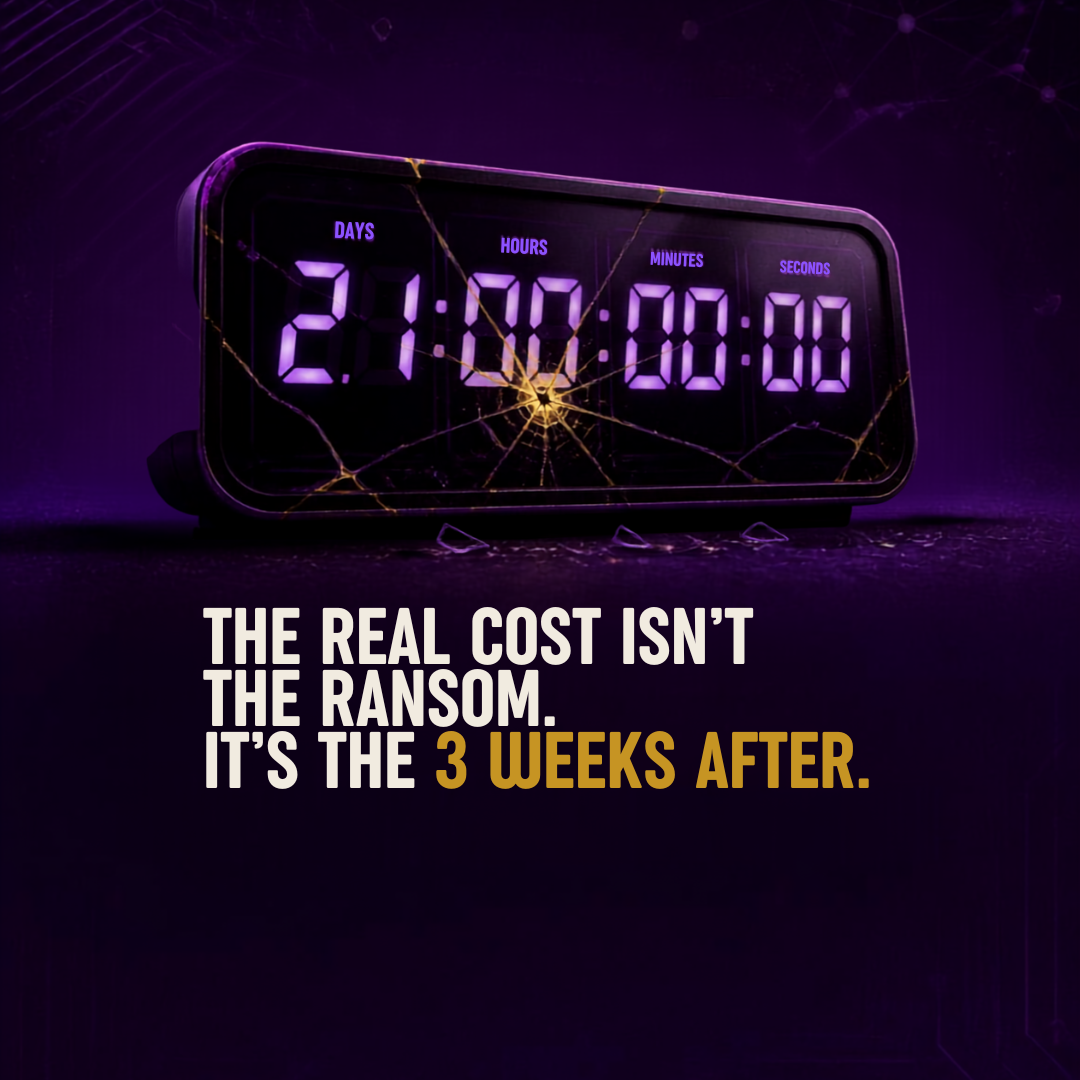
When business owners think about ransomware, the number that usually comes to mind is the ransom demand itself. It is the headline figure, the one that shows up in news stories about companies paying six or seven figures to get their data back. But for most small and mid-sized businesses in the Tampa Bay area, the ransom is not the expense that does the real damage. It is what happens in the weeks after.
The Downtime Problem
A business hit by ransomware typically loses two to three weeks of full operational capacity while systems are isolated, cleaned, rebuilt, and verified. During that window, normal work does not happen. Client communications stall. Invoices do not go out. For an insurance agency, that can mean missed renewal deadlines, delayed claims support, and policyholders who cannot reach anyone. For any small business, it means revenue loss stacked on top of recovery costs, often for far longer than the initial breach itself lasted.
This is the part of ransomware that rarely makes headlines but does the most lasting damage to a business's bottom line and reputation.
Why "Backed Up" Isn't the Same as "Recoverable"
Many business owners assume that having backups means they are protected. Having a backup and having a tested recovery plan are two different things. A backup that has never been tested for a full restoration under pressure is a hypothesis, not a plan. Real recovery readiness means knowing exactly how long a full restore takes, which systems come back online first, and who on your team (or your IT provider's team) is responsible for each step.
For businesses in regulated industries, like Florida insurance agencies operating under Rule 69O-128.032, this also intersects with compliance. Having a documented, tested incident response and recovery process is part of demonstrating a reasonable security posture, not just a technical best practice.
Building a Recovery Plan That Actually Works Under Pressure
At Main Event Managed Services, we work with Wesley Chapel and Tampa Bay businesses to build backup and disaster recovery (BCDR) strategies that are tested, documented, and realistic about recovery timelines. That includes:
● Regular backup verification, not just backup scheduling
● Defined recovery time objectives for critical systems
● A documented incident response plan with clear roles
● Annual tabletop exercises so your team has practiced the process before they need it for real
The goal is simple: if the worst happens, your business is back to work in days, not weeks.
Ready to find out how fast your business would actually recover?
If it has been a while since anyone tested your backup and recovery process, or if you have never had one built in the first place, now is the time to find out where the gaps are before an incident forces the question. Contact Main Event Managed Services (maineventmsp.com) to talk through your current setup.