Ransomware Just Set a New Record: What Q3 2026 Means for Small Businesses
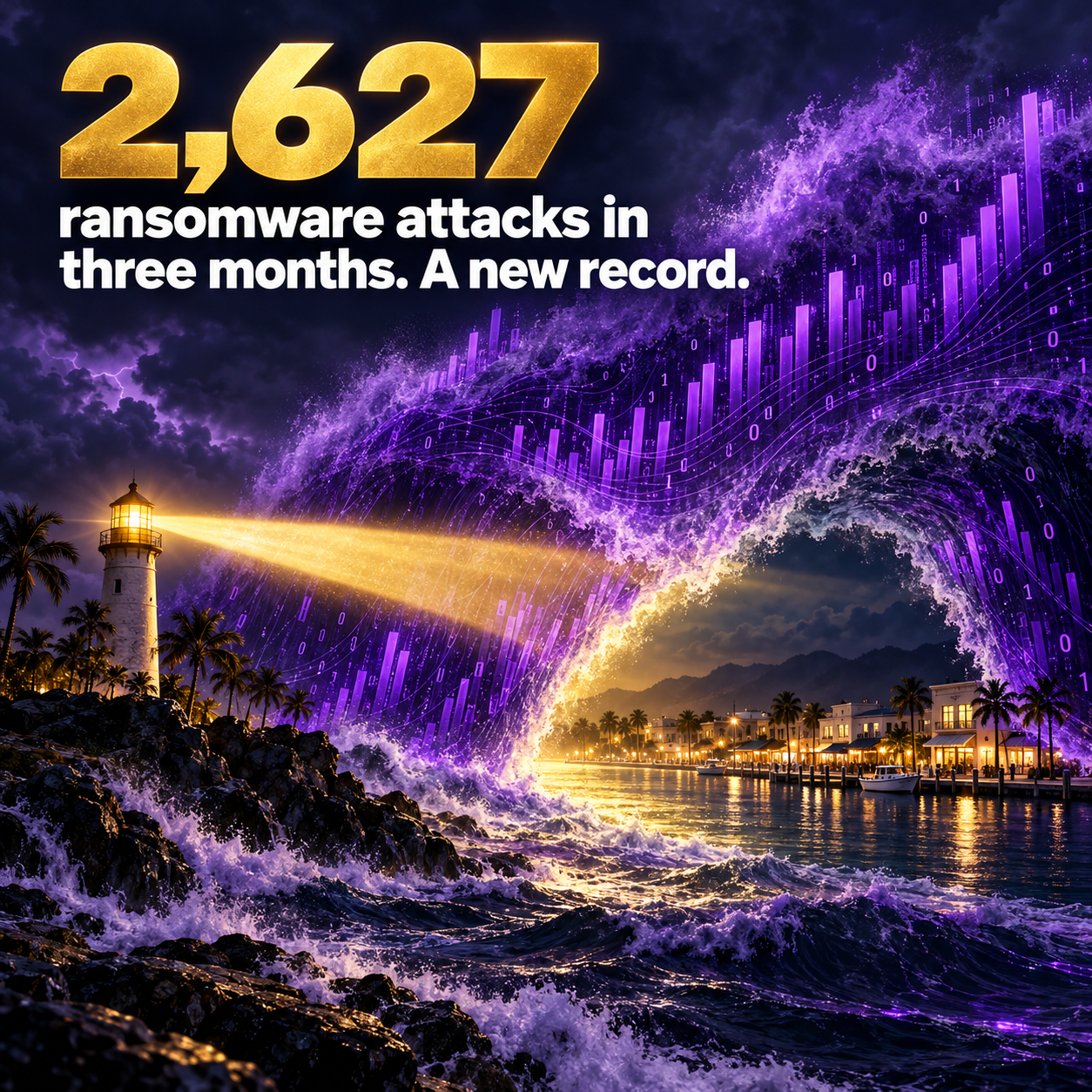
2,627 ransomware attacks in three months. A new record.
On October 9, 2026, Comparitech reported that it observed 2,627 claimed ransomware attacks in the third quarter of the year, setting a new record. Critical sectors including finance, technology, education, and healthcare all saw significant increases.
Those are only the attacks that criminal groups announced on their leak sites. Many small business victims quietly pay, quietly recover, or quietly close, and never appear in anyone's count.
Why ransomware keeps growing
A few forces are driving the surge:
• Ransomware as a service. Criminal developers rent their tools to affiliates, so attacks no longer require advanced skills.
• Automation and AI. Attackers scan the internet for vulnerable devices and write convincing phishing emails at scale.
• A steady supply of stolen logins. Credentials from old breaches and infostealer malware give attackers an easy way in.
• Fresh vulnerabilities. In just the first week of October, actively exploited flaws were reported in Cisco, Citrix, and Atlassian products.
There is some good news. Law enforcement continues to push back. An international operation recently seized infrastructure belonging to the KillSec ransomware group. But takedowns slow criminals down. They don't stop them.
What this means for Tampa Bay businesses
Small businesses in Wesley Chapel, Tampa, and across Florida are not too small to be targeted. Automated attacks don't check your company size before they knock. In fact, smaller organizations often make attractive targets because they're less likely to have full-time security staff.
Earlier this year, a Tampa Bay dental practice disclosed a ransomware attack that encrypted a legacy server. Local businesses are part of these numbers.
What separates a bad day from a lost business
You can't control whether attackers try. You can control how prepared you are when they do. Businesses that recover quickly tend to have:
1. Backups that are isolated and tested. Ransomware actively hunts for backups. Keep copies attackers can't reach or delete, and test restores on a schedule.
2. Endpoint detection and response. Modern security tools recognize ransomware behavior and can stop encryption in progress, then roll back affected files.
3. Patched edge devices. Firewalls, VPNs, and remote access tools are the most common doors in. Keep them updated and replace unsupported ones.
4. Strong authentication. Phishing resistant MFA or passkeys make stolen passwords far less useful.
5. A practiced response plan. Everyone knows who to call, what to unplug, and what not to touch.
For Florida insurance agencies
Ransomware can freeze your agency management system, block carrier access, and expose client files. Rule 69O-128.032 expects licensees to maintain safeguards and be prepared to respond to security events. Your cyber insurance carrier likely expects the same.
Use October to check your readiness
Ask yourself one question: if ransomware hit our office Monday morning, how many days until we'd be back to normal? If you don't know the answer, that's the place to start.
Main Event Managed Services helps small businesses and insurance agencies across Tampa Bay prepare for, prevent, and recover from ransomware. Learn more at maineventmsp.com.
Sources: Infosecurity Magazine, Oct 9, 2026 · NetworkTigers roundup, Oct 5, 2026