End of Life Software: The Ticking Clock Most Small Business Owners Ignore
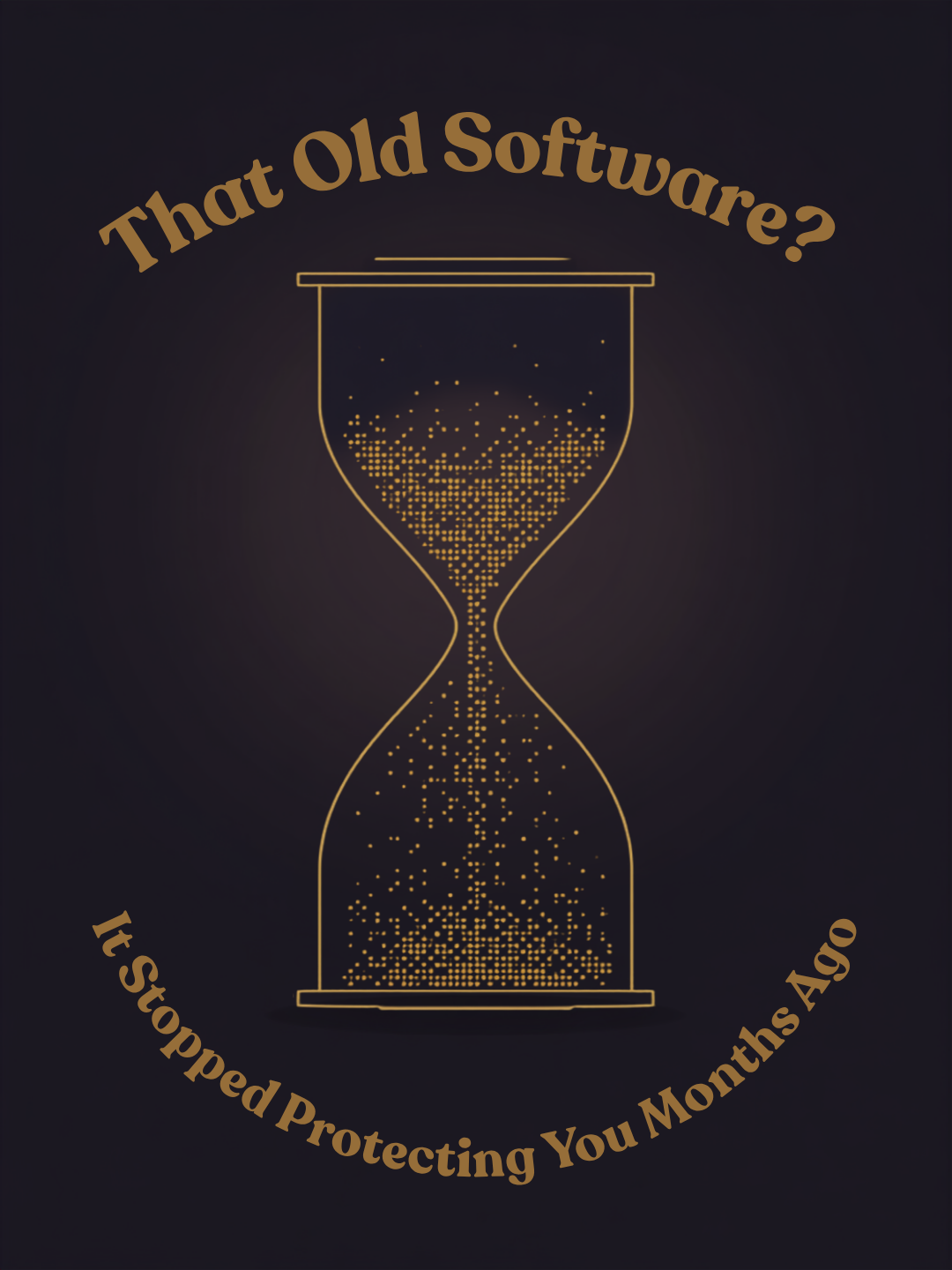
Every piece of software has a support lifespan. At some point, the vendor stops releasing updates for it, including the security patches that quietly keep it safe to use. That date is called end of life (EOL), and for a lot of small offices, it comes and goes without anyone noticing.
What end of life actually means
When software reaches end of life, the vendor stops fixing newly discovered vulnerabilities in it. The program itself does not change. It still opens, still runs the same reports, still looks exactly like it did the day before. That is what makes end of life software different from a system that has an obvious problem. There is no error message telling you the risk has changed.
Why nothing looks different (and why that's the problem)
Most IT risks come with some kind of visible signal: a slow computer, a strange pop up, a failed login. End of life software gives none of that. It keeps functioning normally while the number of unpatched vulnerabilities quietly grows in the background. Attackers know which products have reached end of life, and they specifically target them because the fixes will never come.
The Windows 10 example
Windows 10 reached the end of its support window for most versions in October 2025. Any office still running it on daily work machines is now operating without the safety net of ongoing security patches from Microsoft, whether that is understood internally or not. This is not unique to Windows. Line of business software, older versions of accounting or practice management tools, and even network hardware firmware all have their own end of life timelines.
How to check what's running end of life in your office
A short inventory answers most of the risk here. Worth reviewing:
• Operating systems on every desktop, laptop, and server
• The version and support status of your primary line of business software
• Firmware support status on routers, firewalls, and other network hardware
• Any software your office relies on that has not been updated in more than a year
What to do next
This is exactly the kind of item that should live on your IT provider's radar, not yours. A managed IT partner should be tracking support lifecycles across your environment and flagging upgrades well before a deadline hits, not after. If that is not happening for your office today, it is worth a conversation. Main Event MSP builds lifecycle tracking into ongoing support so upgrades get planned on a timeline, not triggered by an emergency.